Whenever I travel abroad for work, I try and sneak in some birdwatching. Usually I’m in a city, so I end up in an urban park or a cemetery wandering around the paths with my binoculars. Birdwatchers visiting Dublin are truly fortunate, with Bull Island a short bus or taxi journey from the city centre.
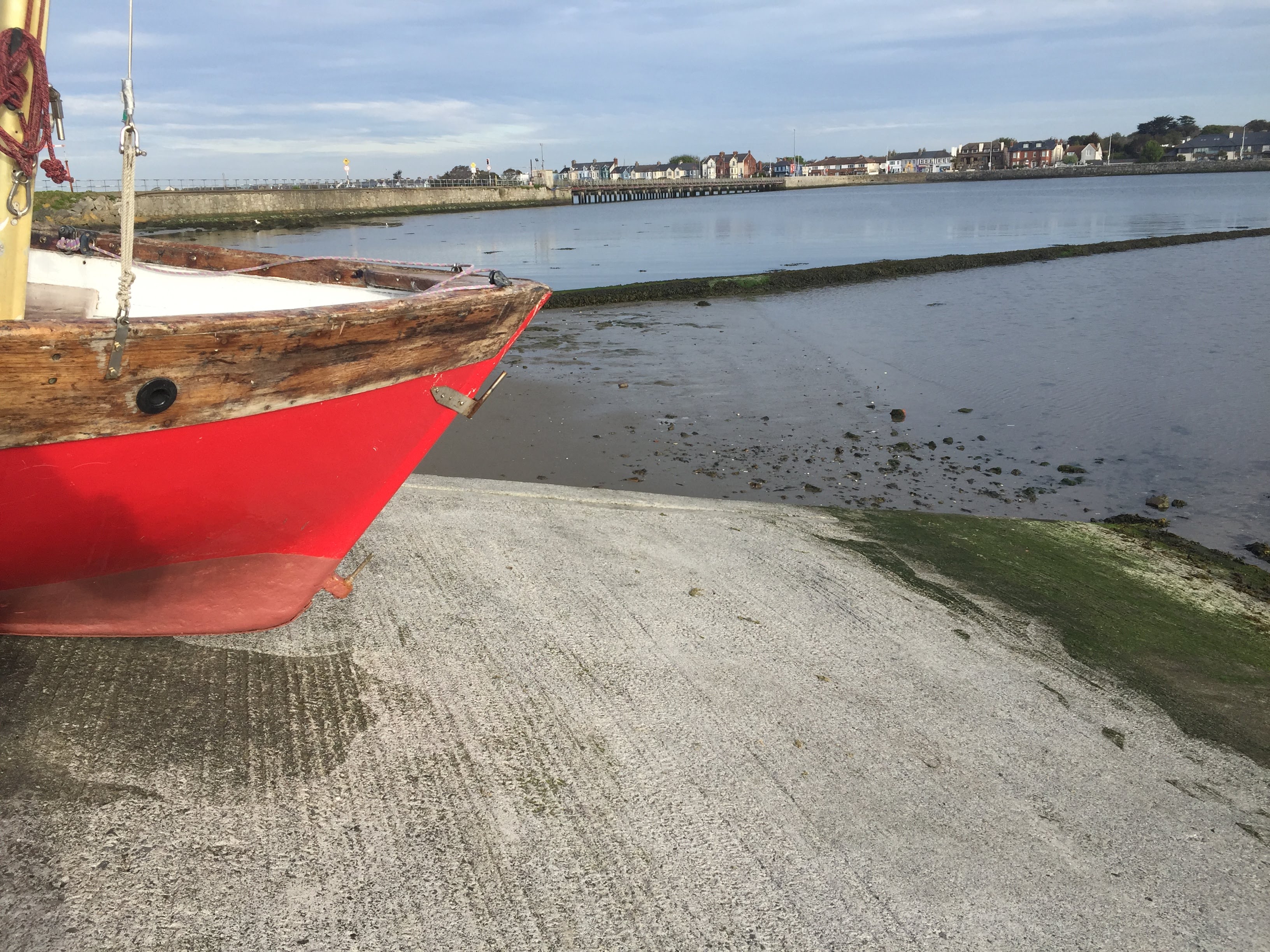
Bull Island is an absolute wonder! 15 square kilometres of prime bird habitat in the middle of a big city, with over 170 species recorded there. It’s impossible to cover it in one visit, so in this post, I’ll focus on the salt marsh. This area extends, on the landward side of the island, from the wooden bridge, past the causeway, right to the tip of the island. The short cropped grass, on seemingly sandy soil, can look deceptively dry. As the tide rises it inundates the salt marsh, leading to soggy shoes (so wear wellies!).
When I was 8 years old, my greatest fear was that the 1 billion people in China would all jump simultaneously. This, I had heard, would create a tidal wave that would wipe out western civilisation. (My mother tried to calm these fears by explaining we were more likely to be wiped out by a nuclear holocaust – Thanks, Mam!) As most of Bull Island is less than 10ft above sea level, a simultaneous jump by the people of Clontarf might be disastrous for it!
On my most recent visit to the Bull, I arrived early on a Sunday morning, and parked behind the Sea Scouts den just over the Wooden Bridge. The decking around the den can be good for viewing the Wooden Bridge – very often there are Red Breasted Merganser and Little Grebe either side of the Bridge. In early Spring, Oystercatcher, Black Winged Godwit and Light-Bellied Brent Geese will also be present. On this occasion, as I walked along the sea wall, I was circled by Sand Martin, Swallows and House Martin. There’s a muddy puddle just before the golf course fence, and House Martin were gathered on the ground collecting mud for their nests. Terns were fishing between the island and the mainland – they were indistinguishable (by me) as Common or Arctic, so I compromised on Commic Terns! Further along the fence for the golf course, Linnet, Goldfinch and Meadow Pipit compete for airtime with their songs. The island juts out towards the mainland at that point, and around the corner the Salt Marsh starts properly.
At first glance it looked a bit barren. On the mud flats, there were Bar and Black Tailed Godwits and a surprising number of Dunlin, now in their summer plumage, flashing their black bellies as they flew past. Numerous Shelduck were waddling through the mud. If you scan the salt marsh you’ll often see the heads of Grey Heron or Little Egret popping out from the vegetation, with some Lapwing and Curlew near the edge of the water. A whinnying sound like a horse revealed the presence of at least one Whimbrel. At intervals there are posts sticking out of the ground – in winter these are worth scanning as often you’ll find a Peregrine perched on one, digesting its last wader.
The chain-link fence of the golf course has disintegrated at certain points, so you can scramble up the grassy mound and get a good view of the mud-flats and the salt marsh. The ditch behind the mound is worth checking out also. This time there was a very smart looking male Reed Bunting giving his three syllable call. Half-way between the wooden bridge and the causeway, there’s a creepy stretch of fence draped in shoes and gloves, like a memorial to the drowned. More likely it’s a monument to human stupidity and to the destruction we’re doing to the ocean – showcasing the vast quantities of waste that wash up on the shores of this Special Area of Conservation.
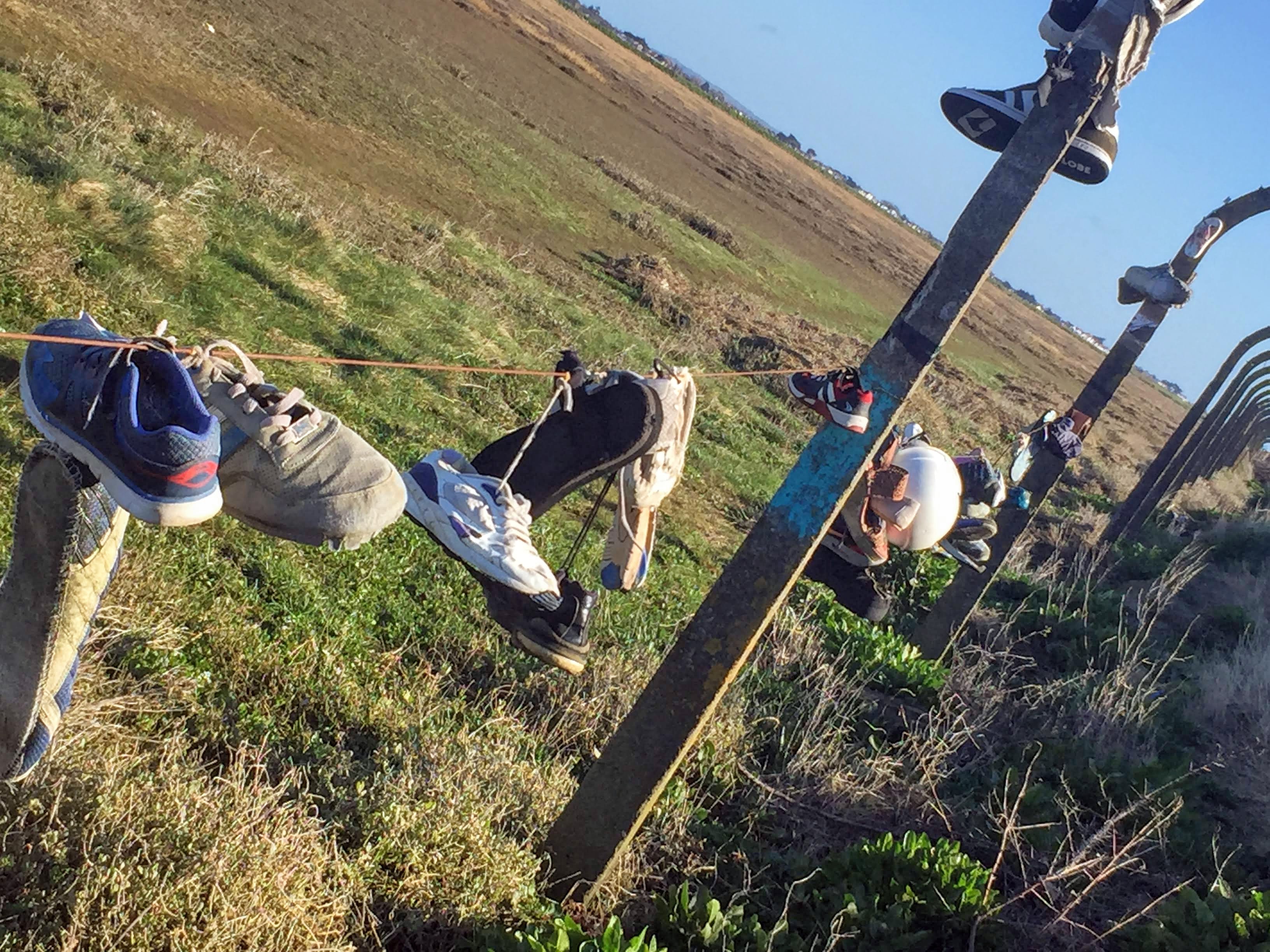
The salt marsh is a great place to see Wheatear on their spring migration. Not this time though. Instead I was surprised as a long-billed brown bird erupted from near my feet – a Snipe I initially presumed – but it flew low and dropped down back to the salt marsh about 20 metres away – a Jack Snipe! Delighted with myself, I headed back to the car, paying my respects at the shoe cemetery on the way.
For more detailed information on Bull Island, there’s a fantastic website called www.bullislandbirds.com with regular bird sightings, annual bird reports, maps, photos, and research. Tom Cooney seems to be the man behind it, and he’s created an amazing resource for all, and a strong base of research to argue for the future conservation and protection of Bull Island. We could do with more people like him!

 BirdBrain
The above blog post is an amalgam of two visits. The Swallows, House Martin, and Sand Martin were in early May. The Jack Snipe was seen on an earlier visit at the end of March. Jack Snipe are less common as it comes into summer, and then return in Sept / October.
LikeLike